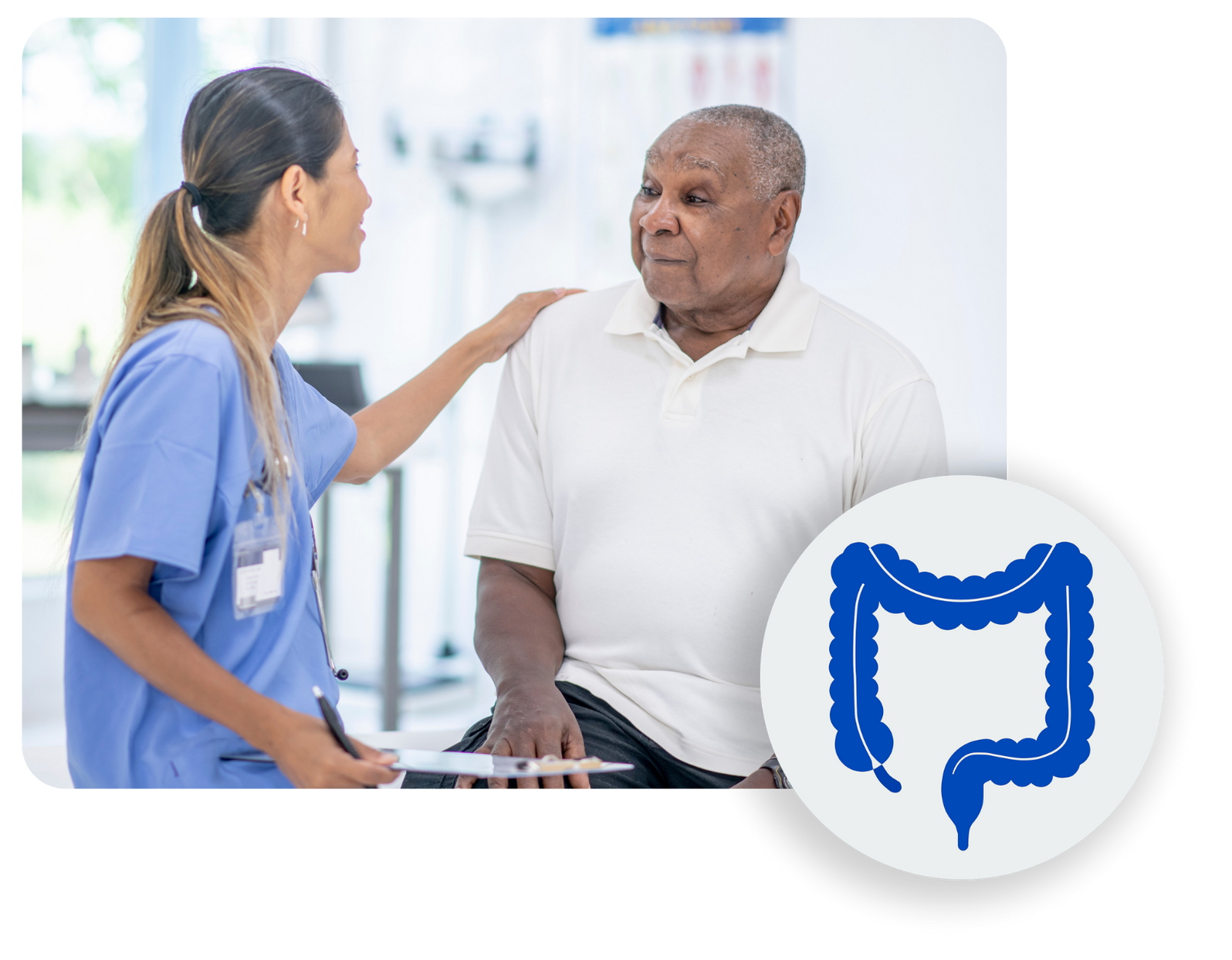
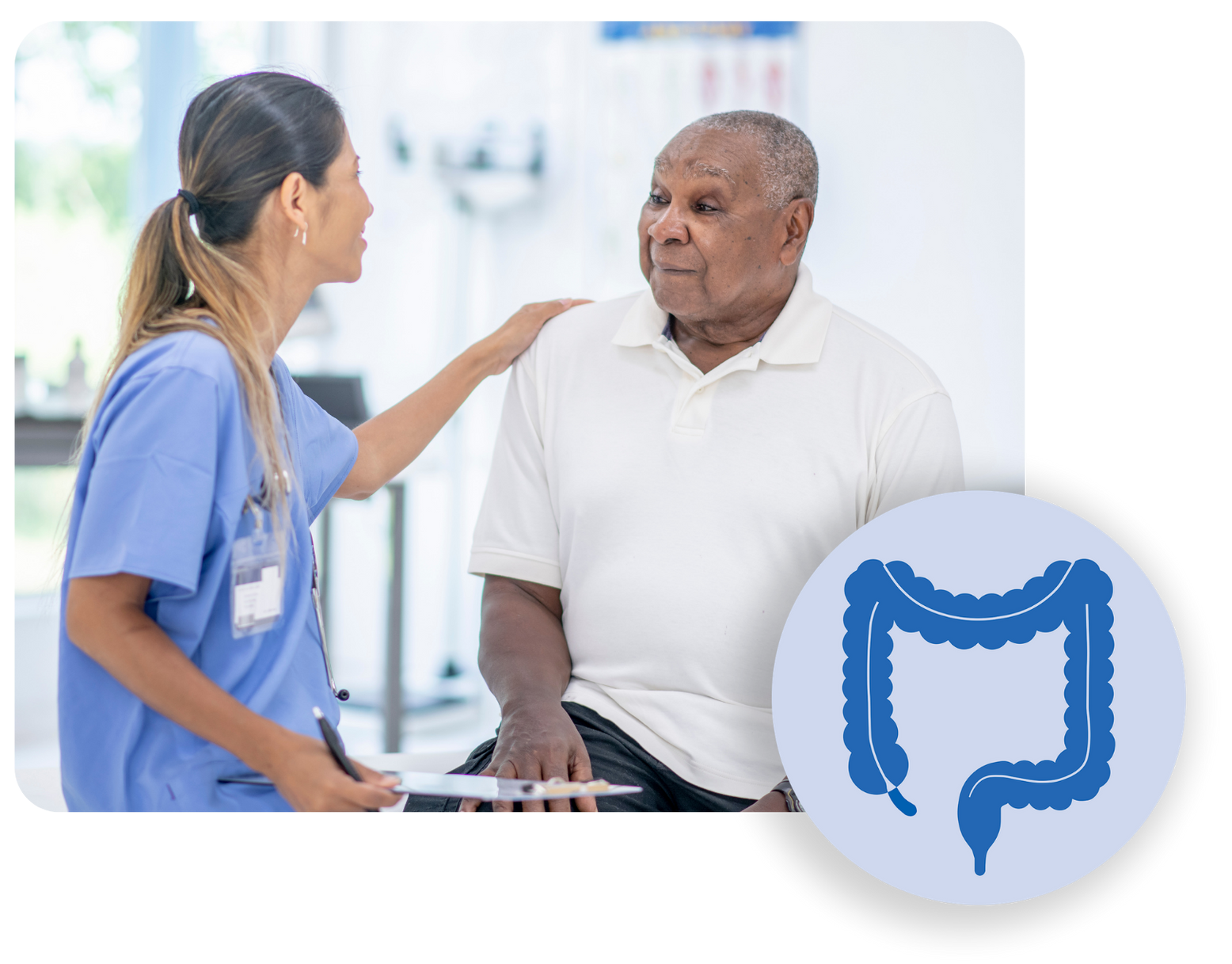
The screening most people put off. Here's why you shouldn't.
Colorectal cancer is the second leading cause of cancer death in the United States, and it's rising fastest right here in eastern North Carolina. Screening doesn't just catch cancer early. It can stop cancer before it starts by finding and removing precancerous polyps.
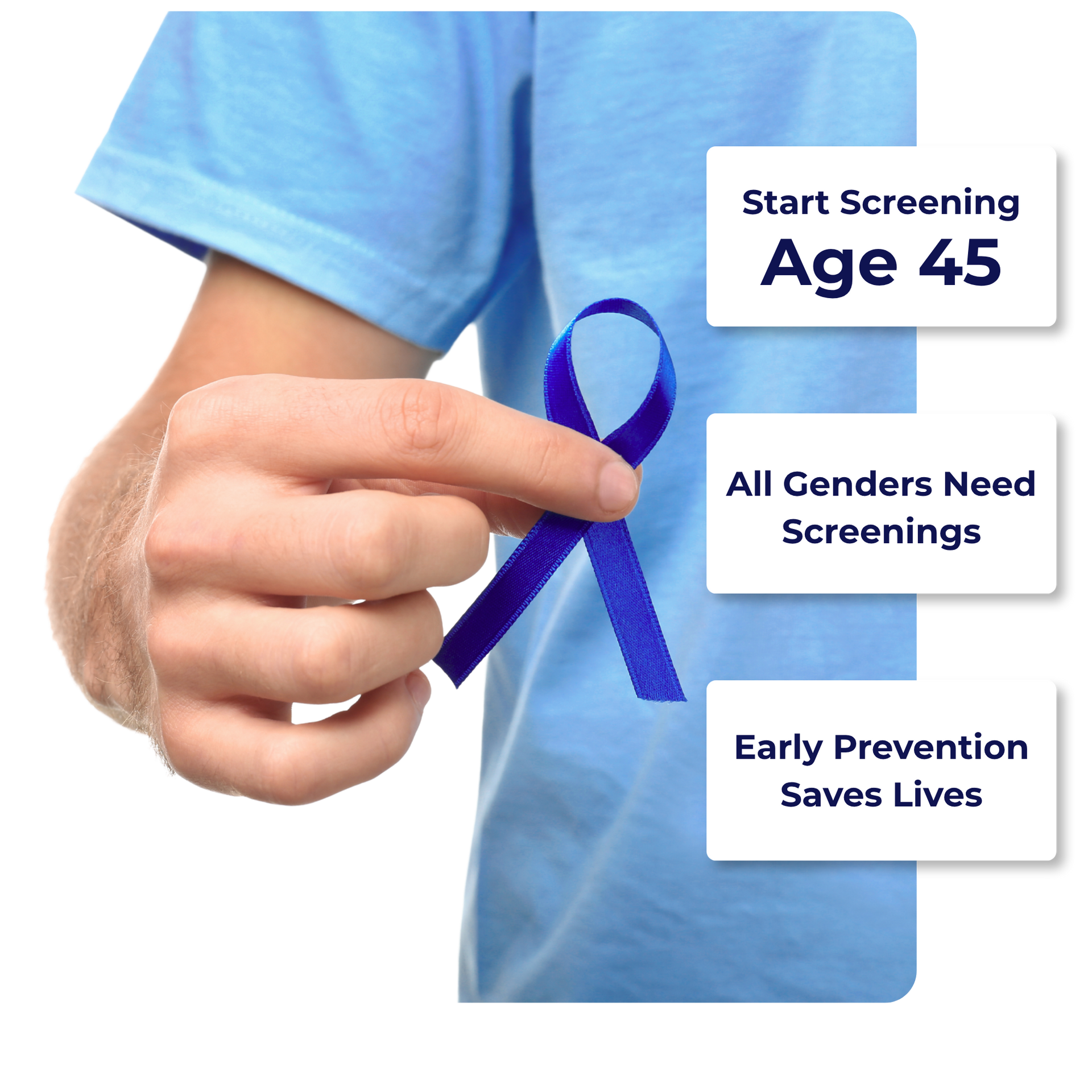
Most people diagnosed with colorectal cancer had no symptoms at all. Feeling fine is not the same as being in the clear. Screening starts at 45. You may need to start earlier with a family history of colorectal cancer.
How It Works
1. Fill out the form.
It asks a little about you: your age, where you live, your family history.
2. Our staff reviews it.
A real person from Cancer Services reads every form and reaches out to you in English or Spanish to talk through your next step.
3. Get the right screening for you.
That's either a home test kit mailed to you or a colonoscopy referral, based on where you live and your family history.
Two Ways To Get Screened For Colorectal Cancer
At-Home Testing Kits
A simple kit mailed to your door. Collect a sample at home, send it back, and a medical professional reviews your results. No prep, no procedure.
Colonoscopy
A doctor examines the colon with a small camera while you're sedated. It's the most thorough option and can remove polyps before they become cancer.
Who Qualifies?
Screening is covered, even without insurance.
Colorectal cancer screening is a covered benefit for Medicaid, Medicare, and private insurance.
No insurance? You still qualify. We connect you with a provider at the health department nearest to where you live, and at-home test kits come at no charge.
Need A Ride? Bring Two Friends.
Cancer Services provides transportation to colorectal cancer screening events for groups of three or more. Round up your church group, your coworkers, or your neighbors and we'll get you there.
The screening gap in Eastern NC is costing lives.
In rural eastern North Carolina, colorectal cancer is found later and proves fatal more often than in the rest of the state. Black residents face incidence rates about 20% higher and mortality rates 30 to 40% higher than white residents. Fewer nearby providers, longer drives, and lower screening rates all play a part.
That gap is exactly why Cancer Services exists. We partner with free clinics and county health departments across the region to find the people most at risk and clear every barrier between them and a screening: cost, distance, paperwork, and fear.